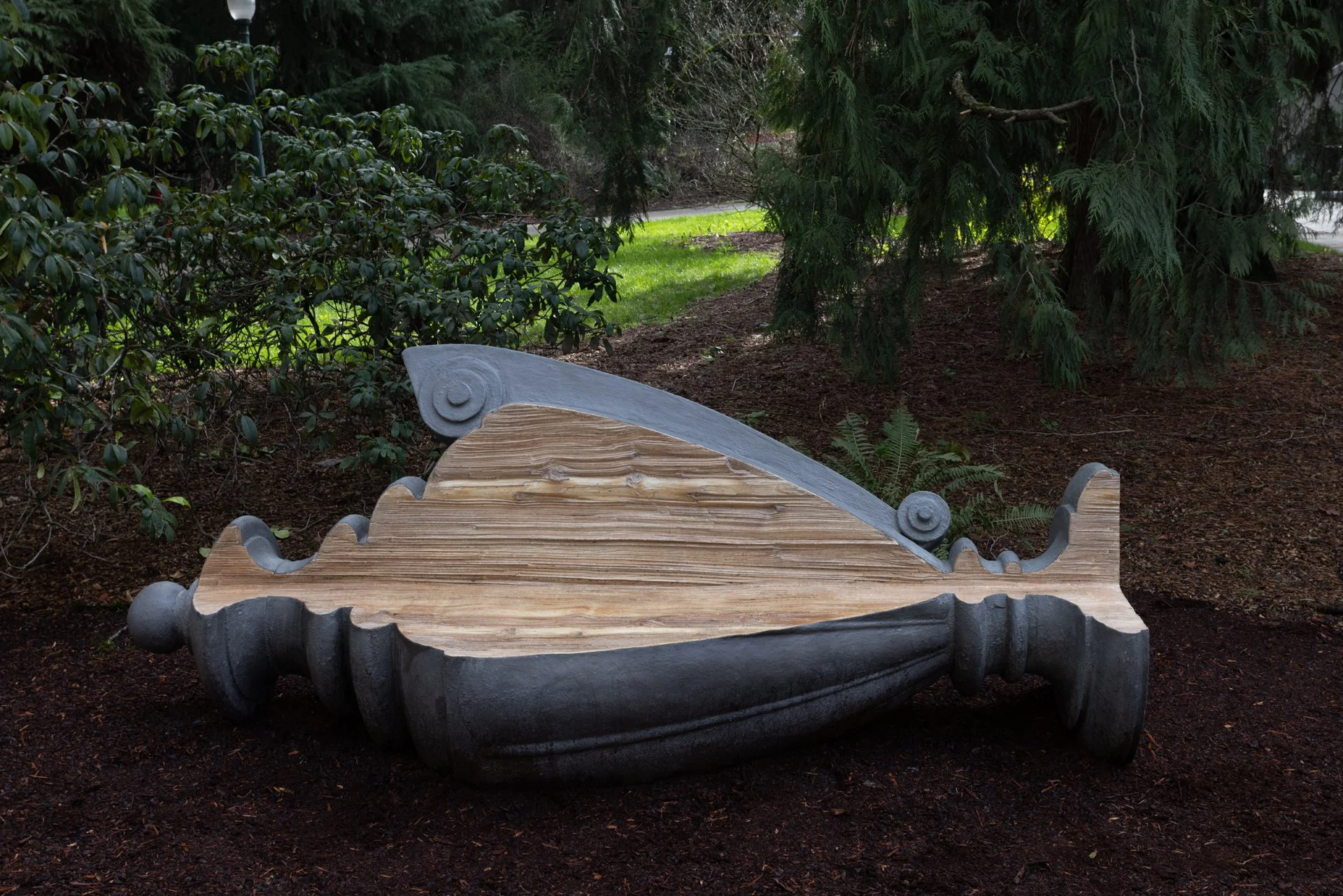
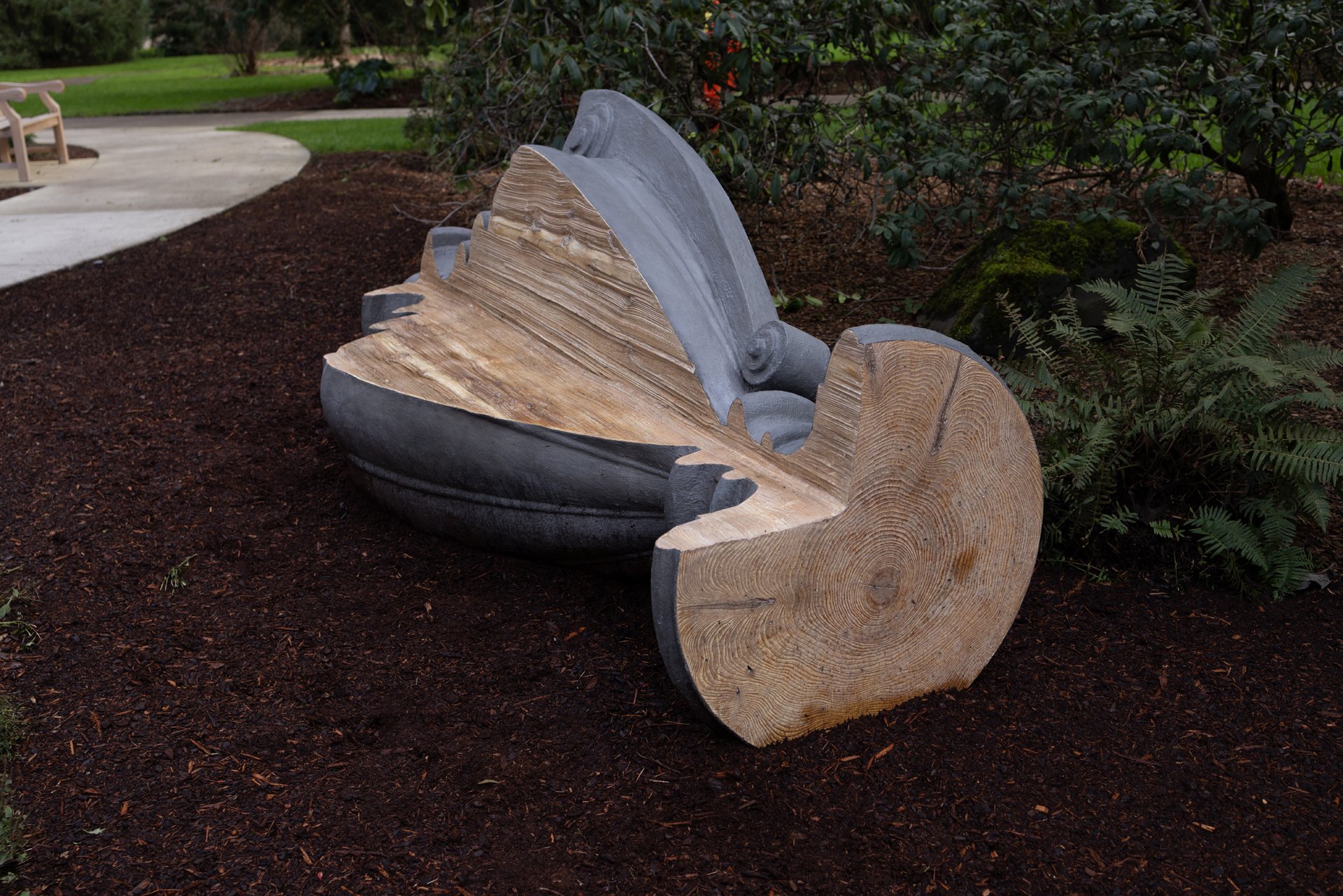
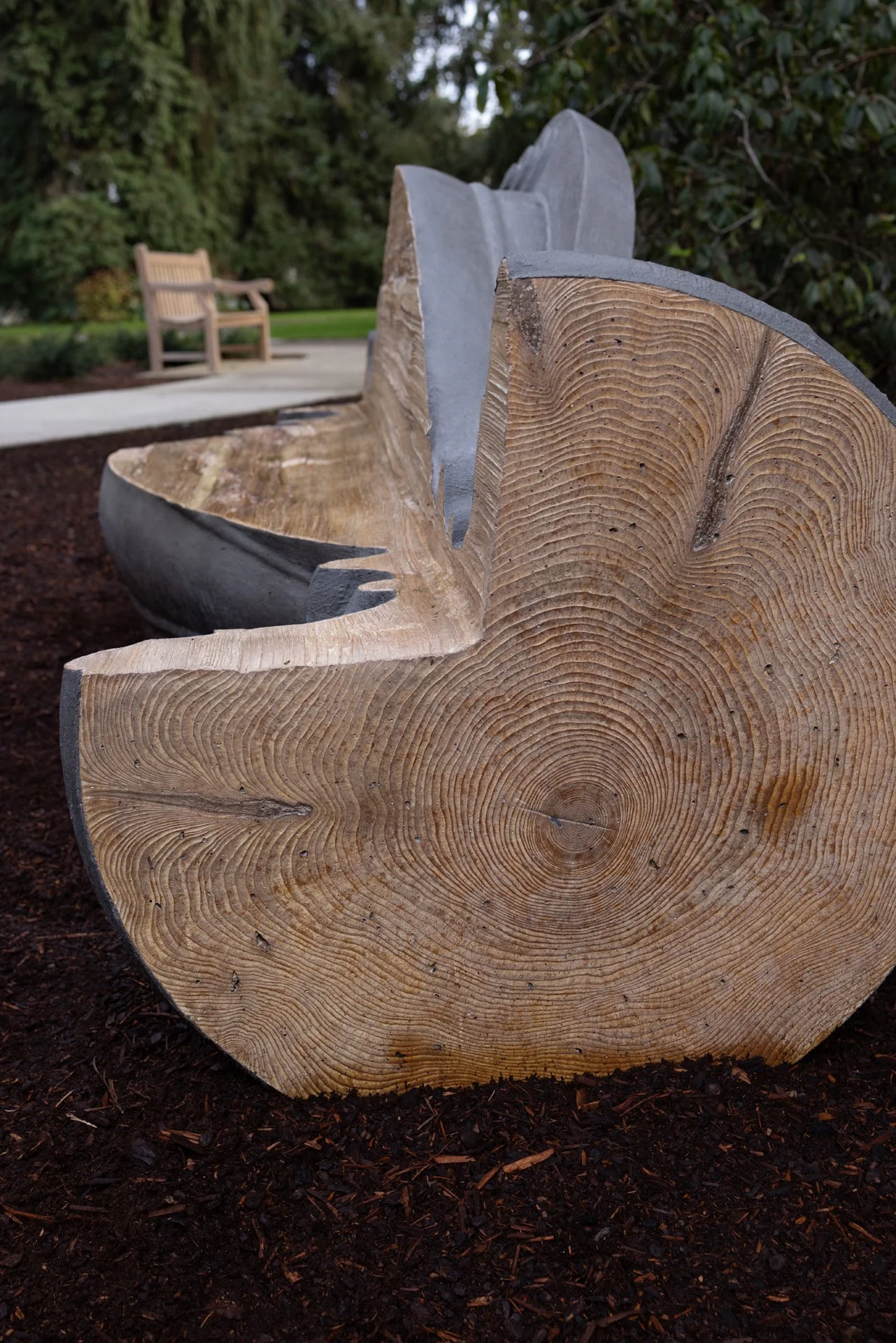
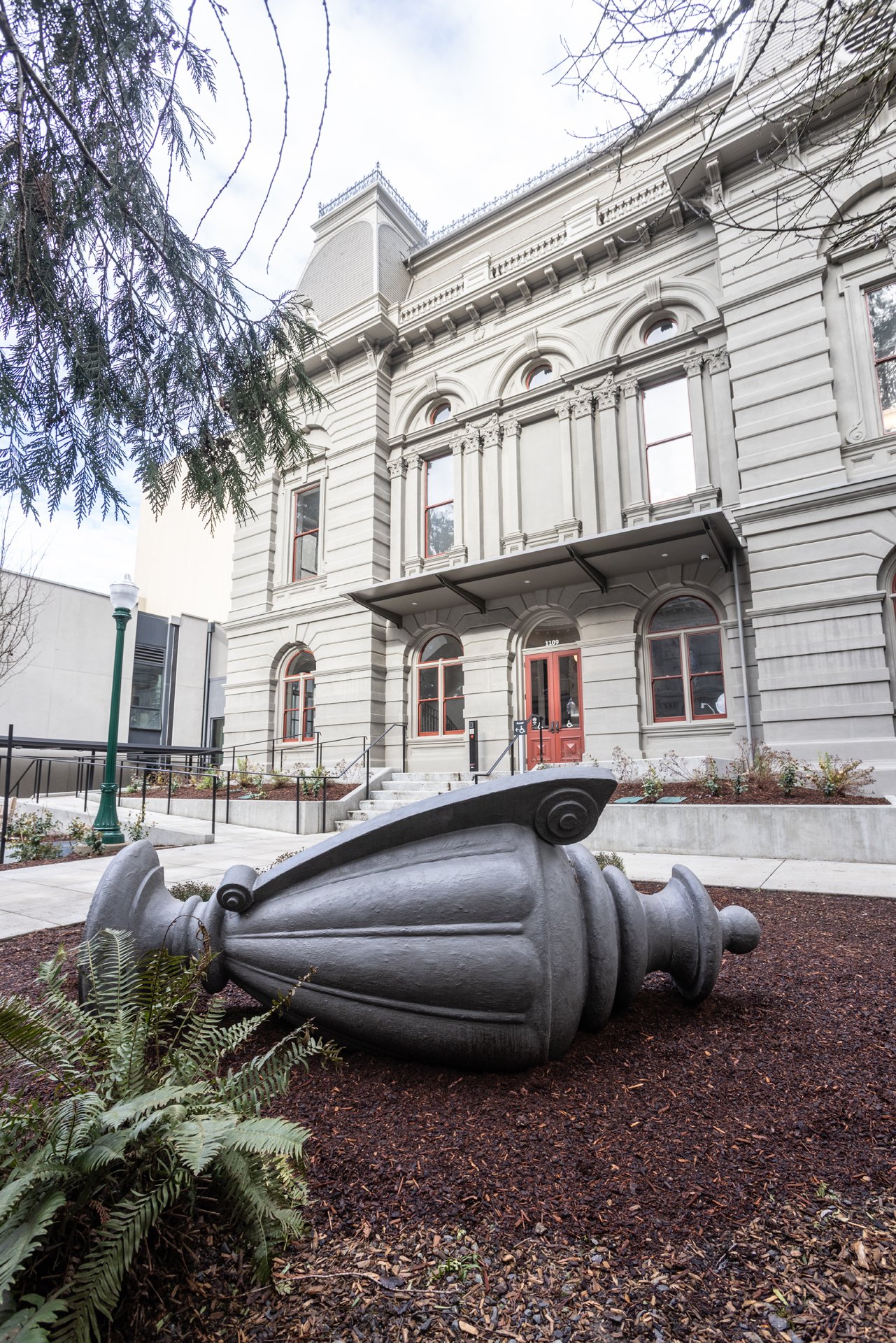
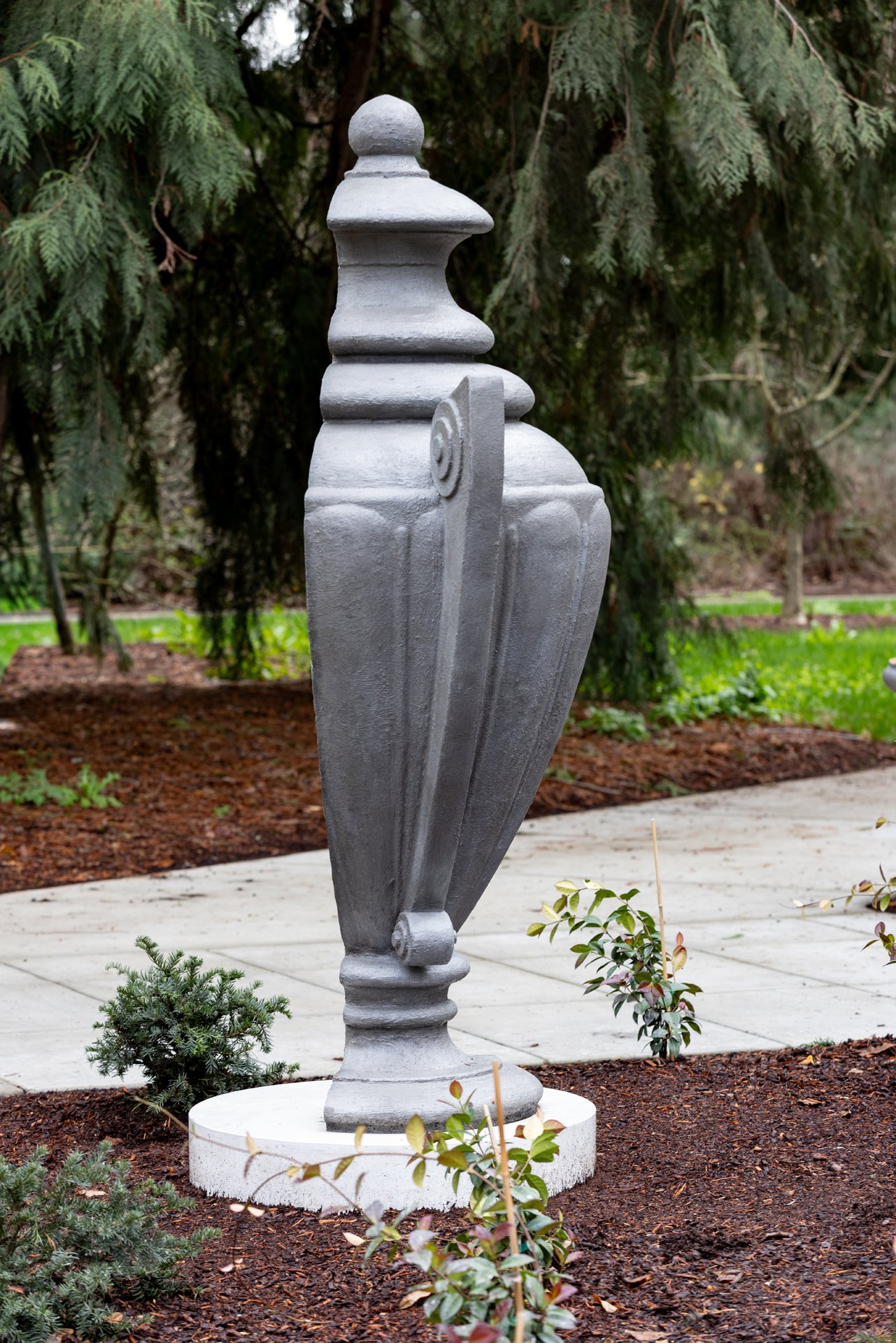
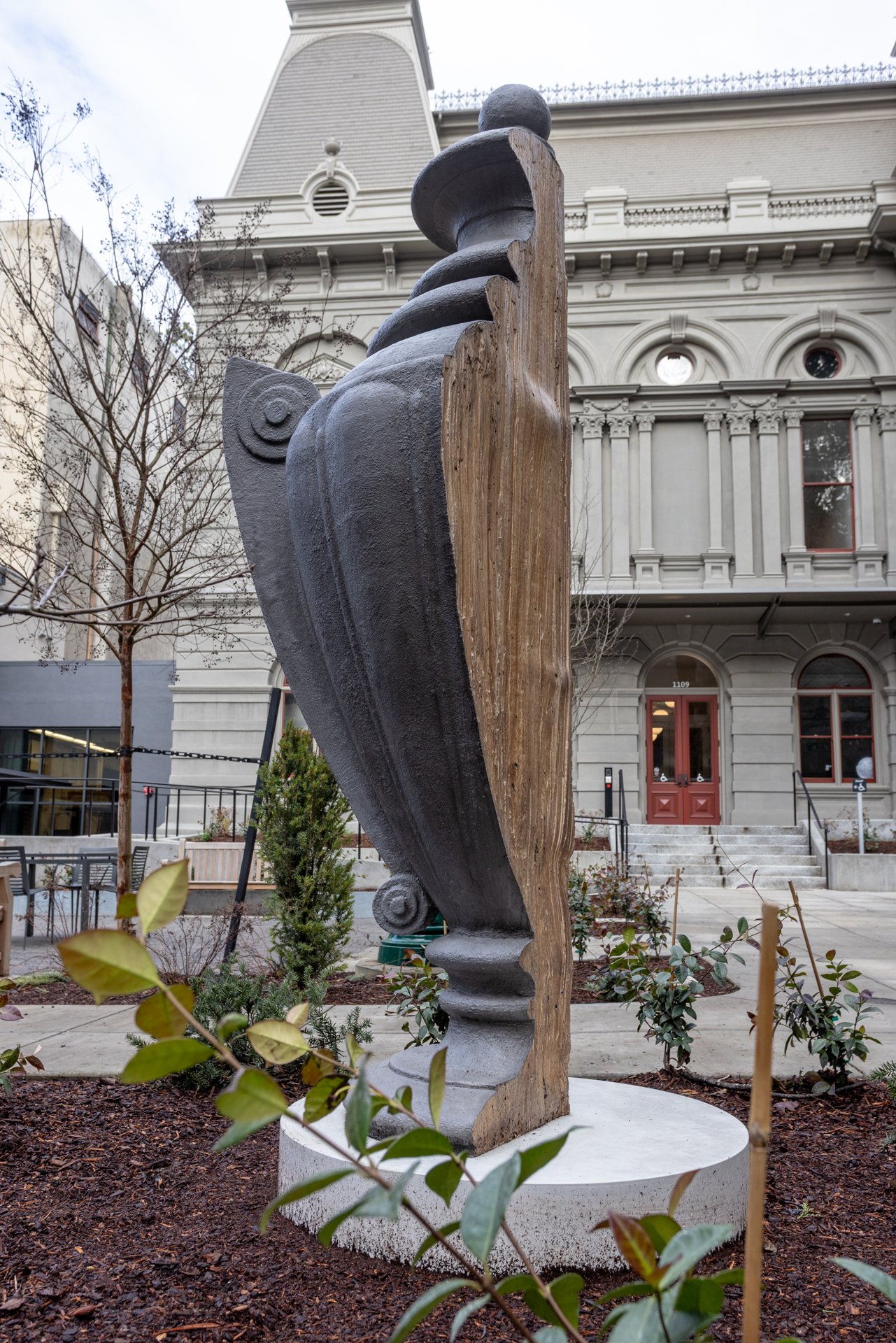
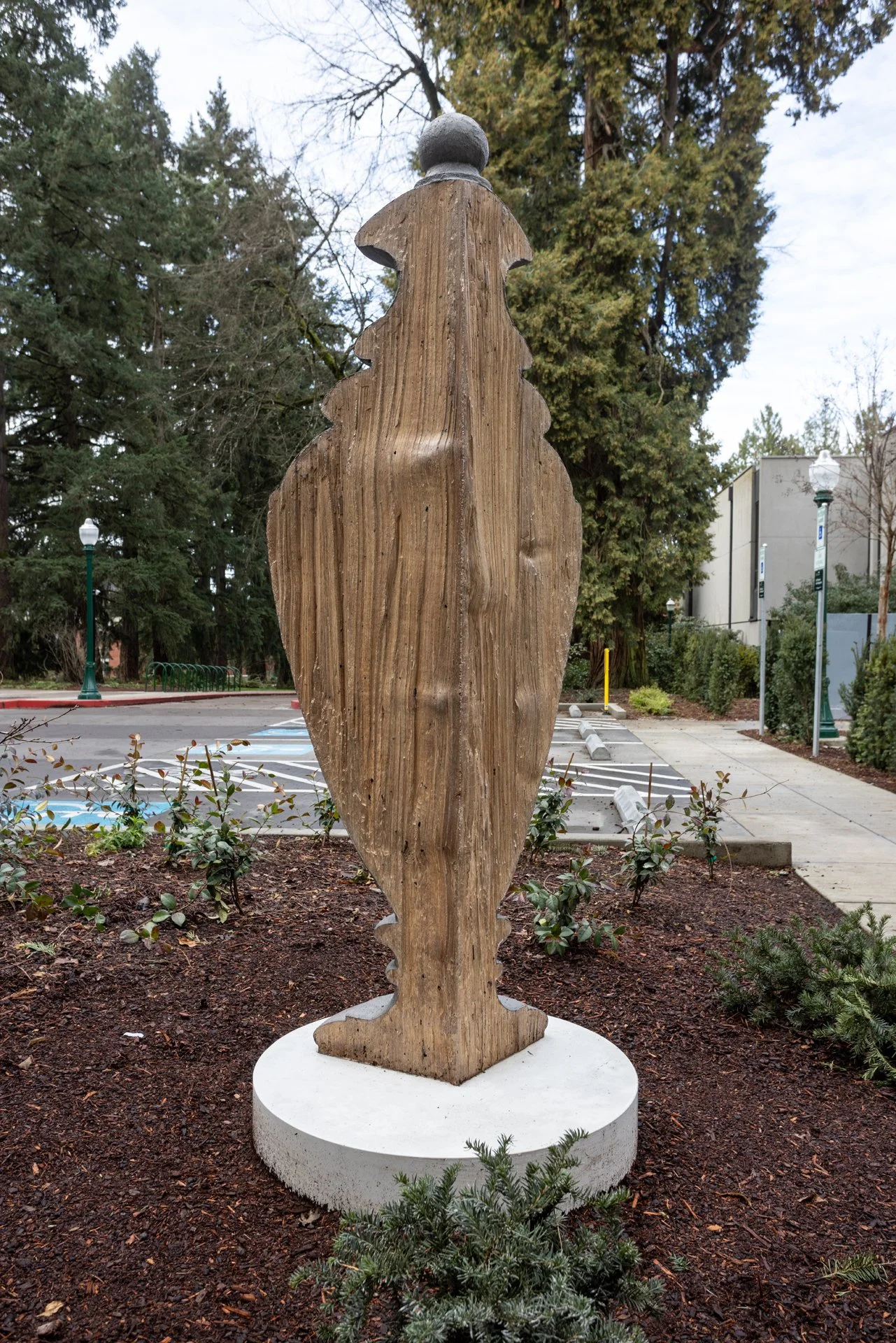
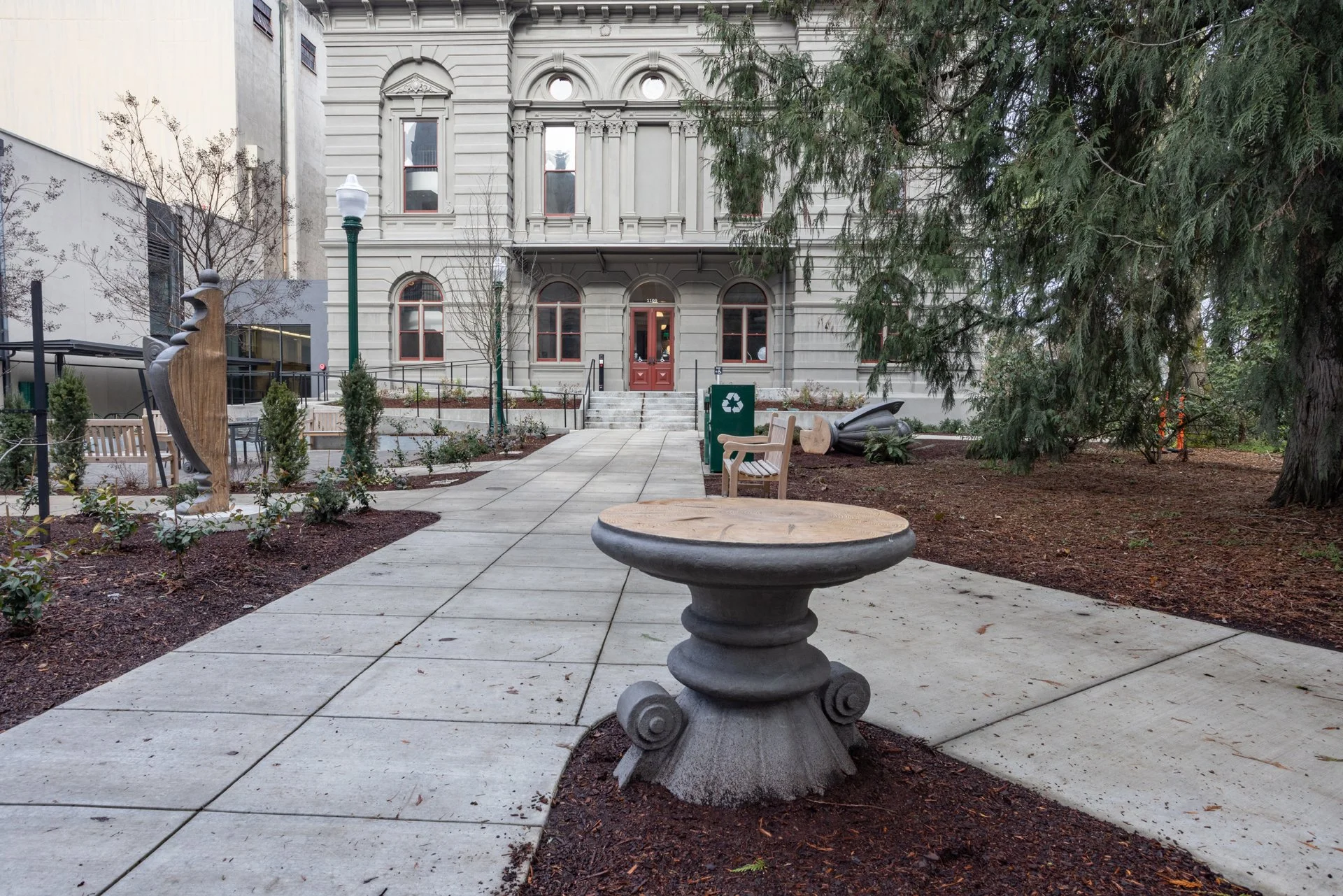
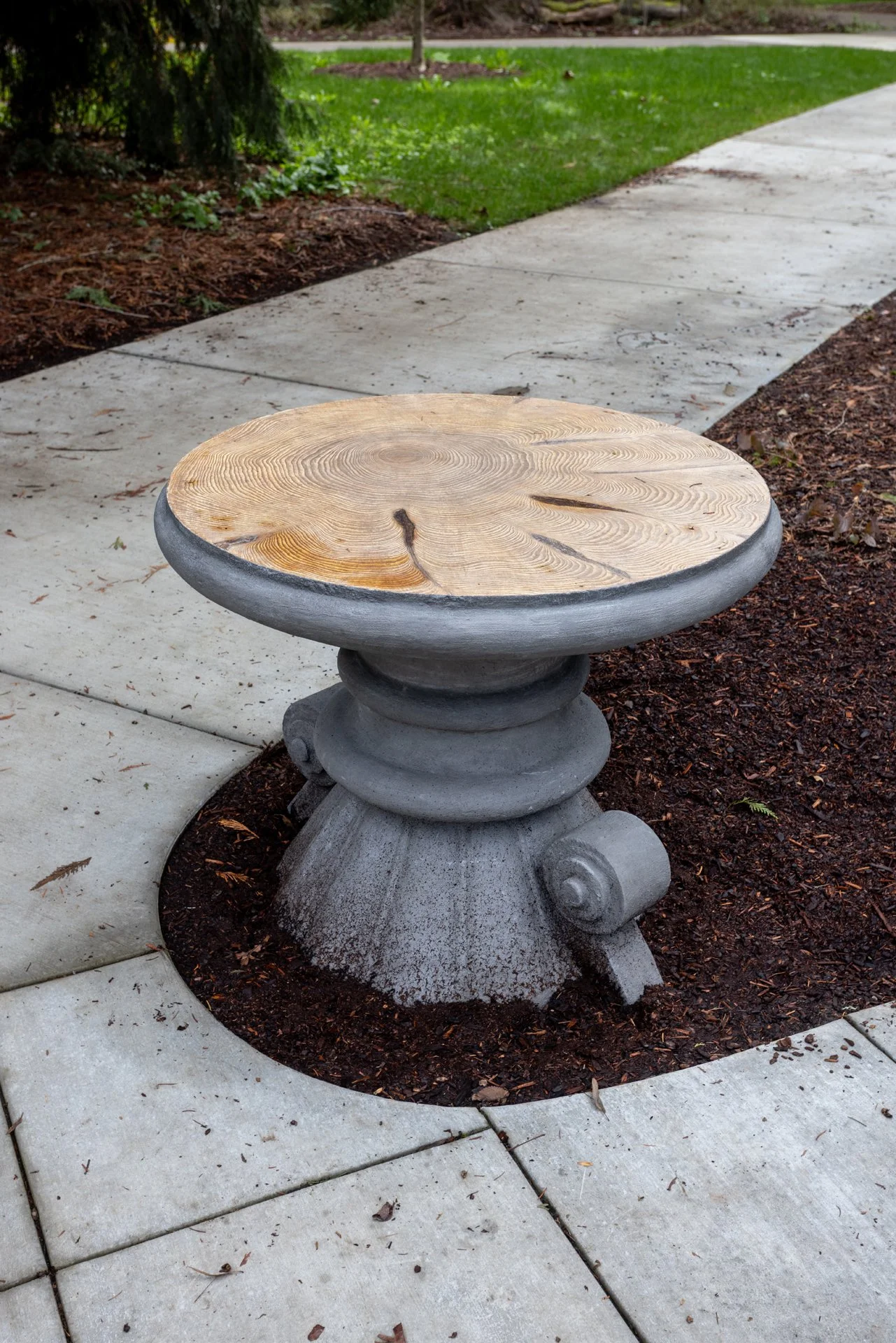
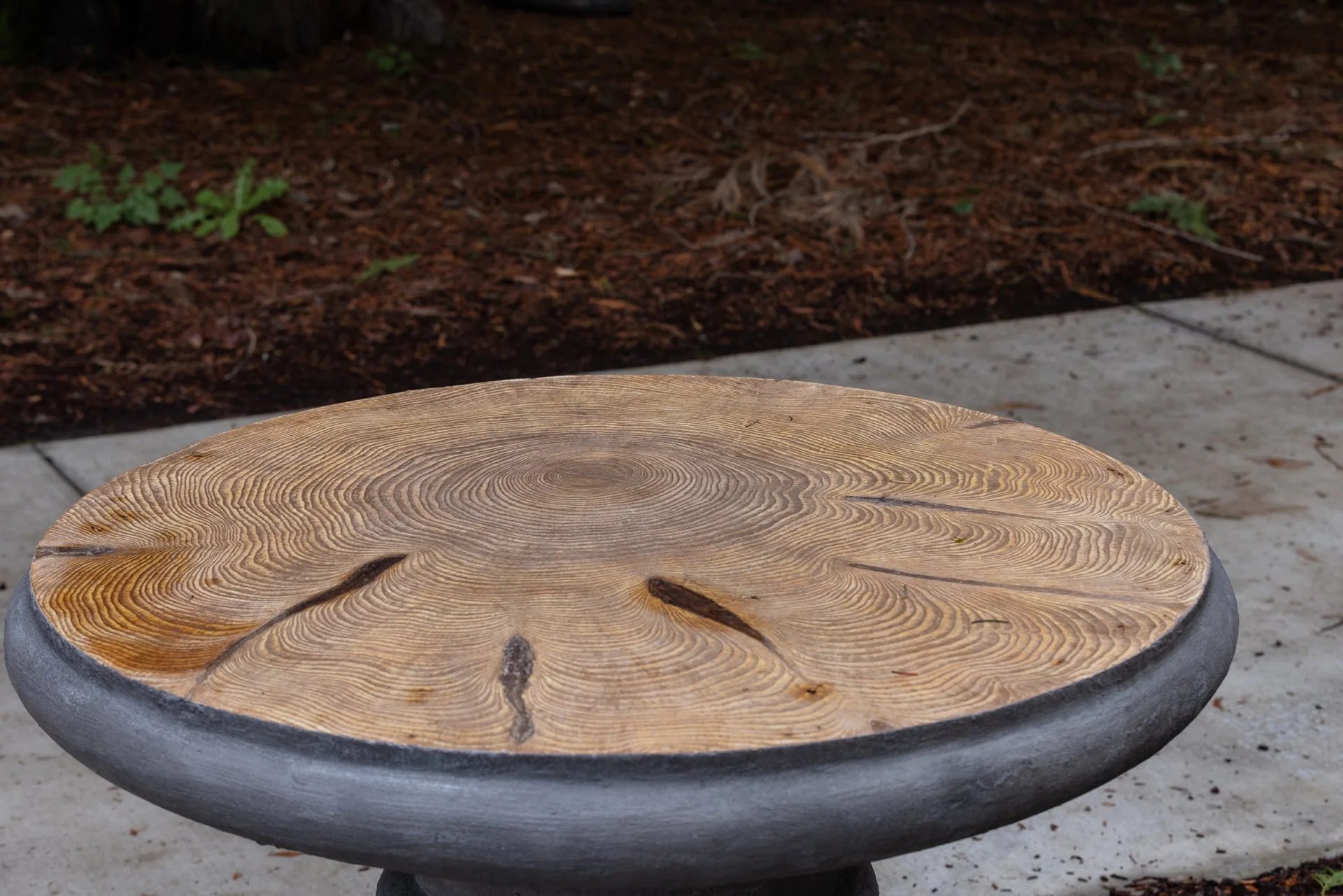
Deadfall of the Second Empire, 2026
Concrete
Bench: 38” x 105” x 50”
Figure: 74” x 26” x 24”
Table: 28” x 38” x 38”
Sometime around 1902, three tons of carved old-growth cedar vanished from the roofline of Villard Hall without a single written record, a surviving fragment, or a witness account. For fifteen years, twelve massive urns had stood fifty feet in the air, crowning the Second Empire silhouette of the University of Oregon’s most ornate building. Their disappearance was as absolute as it was silent.
More than a historical curiosity, their disappearance is a rupture in a carefully constructed masquerade. Completed in 1886, Villard Hall was designed in the fashionable style of Napoleon III’s Paris—a "bastion of Western Civilization" rising out of Oregon farm fields. Despite being built on the lands of the recently displaced Kalapuya people and during a period of such extreme financial instability that faculty salaries were slashed to keep the doors open, the University chose to invest in an elaborate facade of grandeur. The cedar urns were "sand-painted" to mimic chiseled Parisian stone: a material deception intended to project a stability and heritage that the frontier institution had yet to earn.
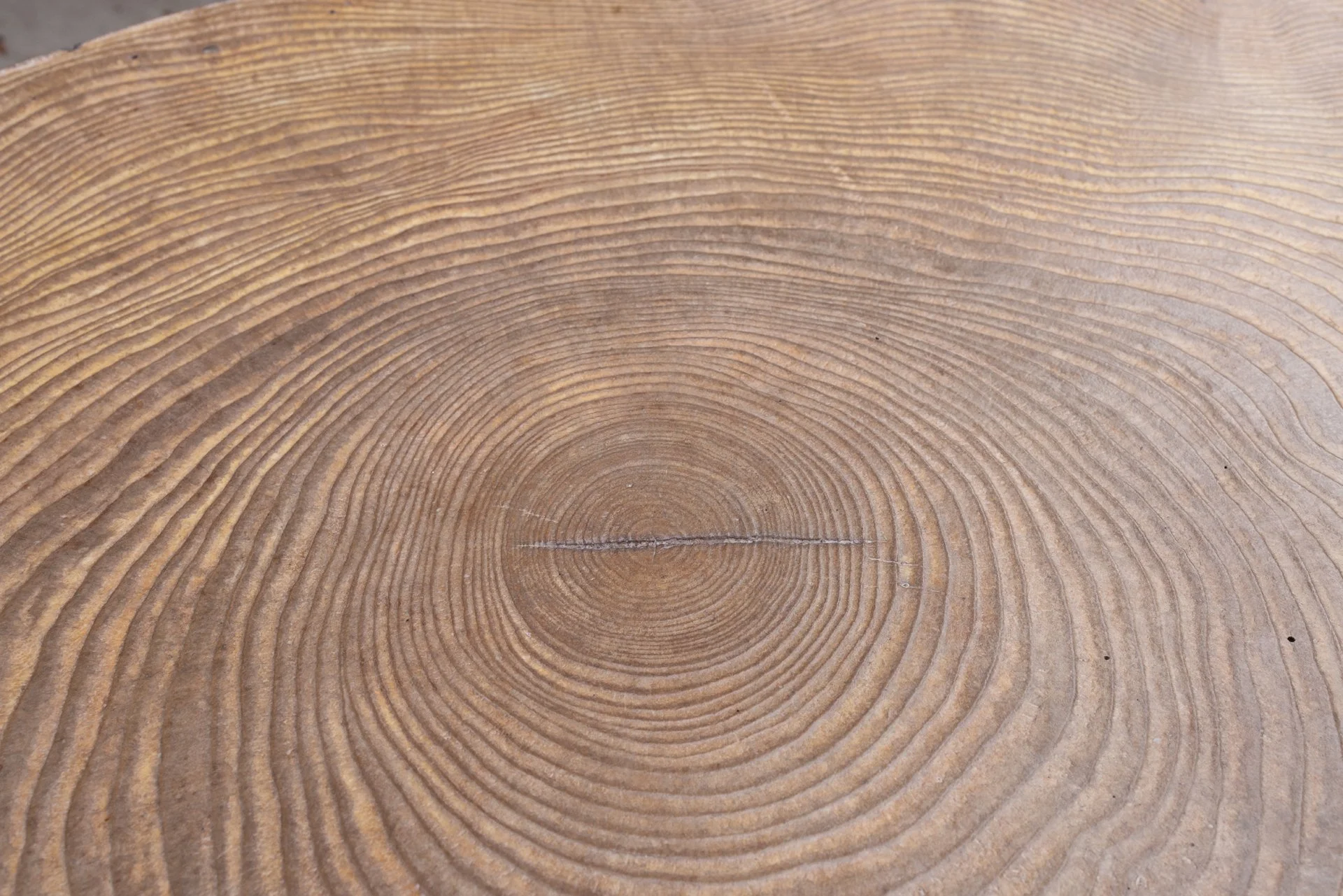
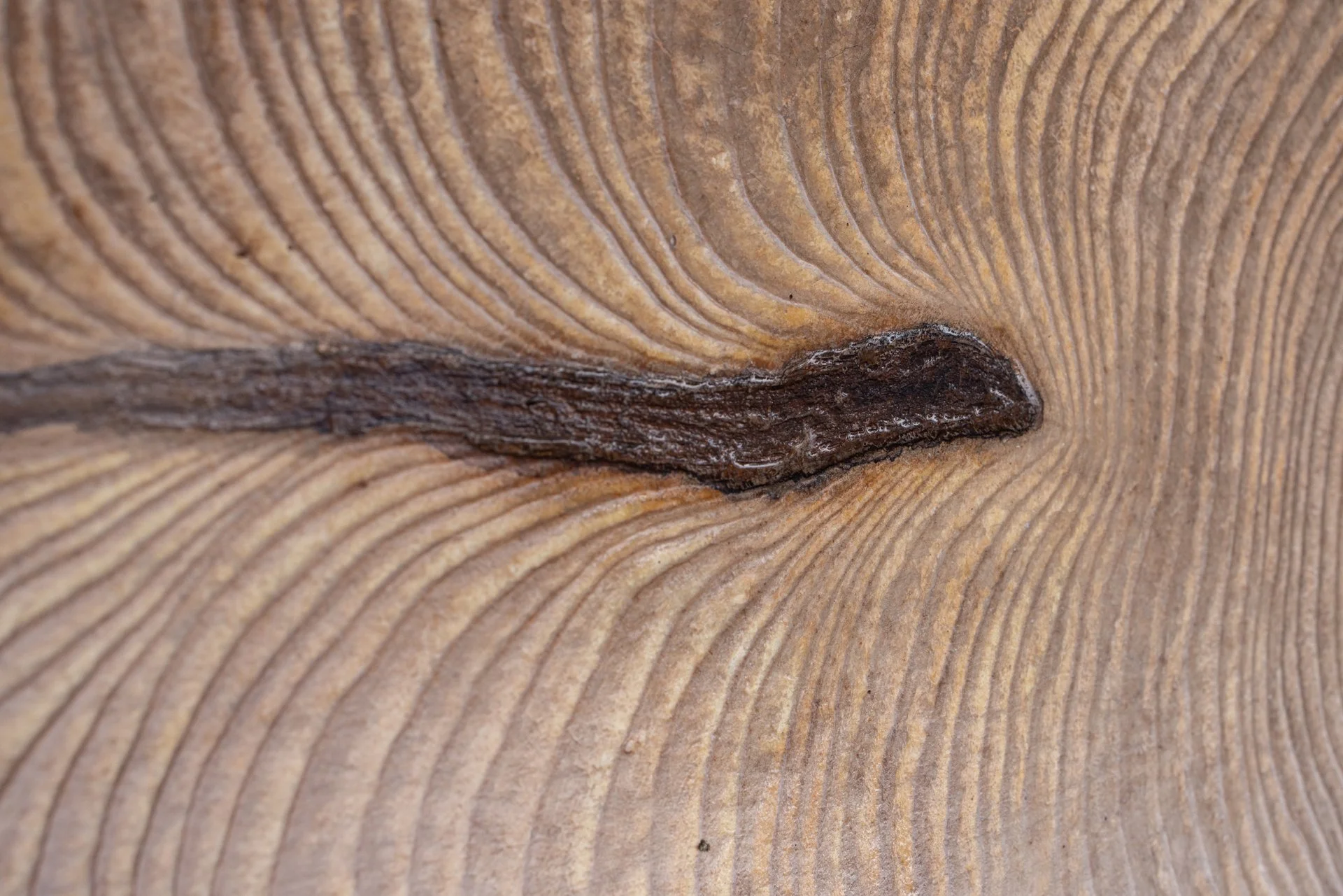
Deadfall of the Second Empire is a material excavation of this lost narrative. Composed of three cast-concrete sculptures—a figure, a table, and a bench—the work recreates fragments of these vanished urns at a human scale, but the original deception is now reversed. While the outer surfaces of these fragments maintain the building’s sand-painted stucco finish, the "broken" faces reveal the texture and color of split cedar. In these works, masonry performs the role of wood. By bringing these monumental forms down from the roofline and placing them along the pedestrian path, the project transforms emblems of distant, high-culture aspiration into humble, imperfect objects. These urn fragments shed their imperial pretension to become a place for the community to sit, rest, and reckon with the complicated layers of the land's history.
Verdant, 2021
Painted aluminum
17 ft x 260 ft x 20 ft
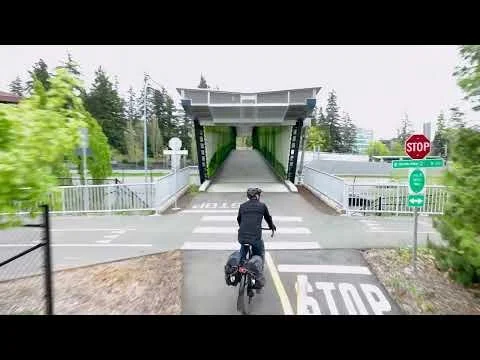
Commissioned by Sound Transit for the city of Redmond, WA, this bridge connects a technology campus and bike trail to the Overlake Village light rail station. Redmond’s natural areas are hand-painted in the palette of green phosphorescent monitors with marks evoking low-res graphics of the early computer age. Three miles of a custom aluminum profile were extruded to create the 1026 vertical louvers designed to conceal the image from highway drivers beneath the bridge and create safe sight lines for pedestrians. Over 156,000 hand-painted marks comprise the imagery.
Core Beliefs and Core Values, 2021
Cashmere, Cotton, Silk, Wool, Acrylic
13 ft x 17 ft and 13 ft x 19 ft
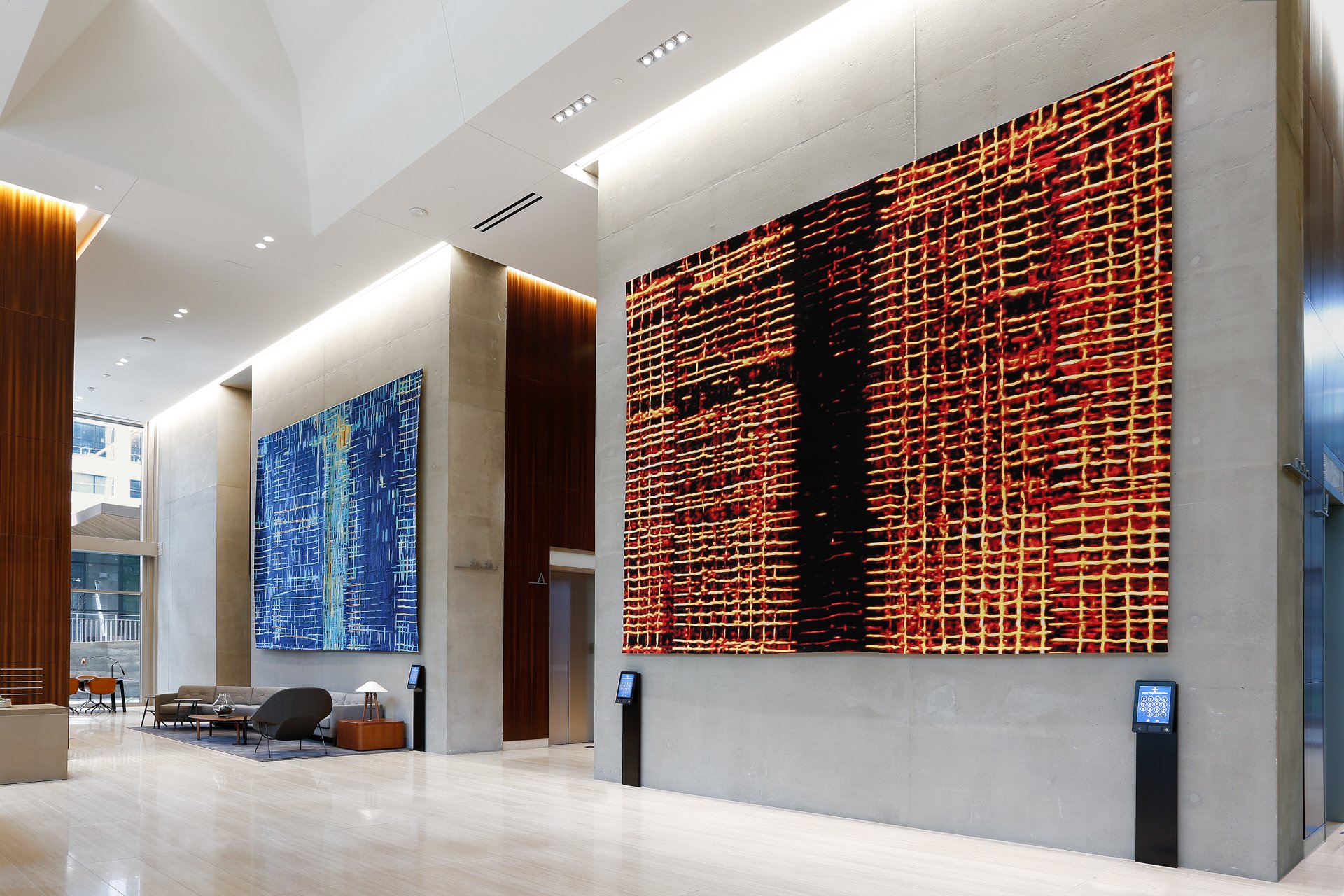
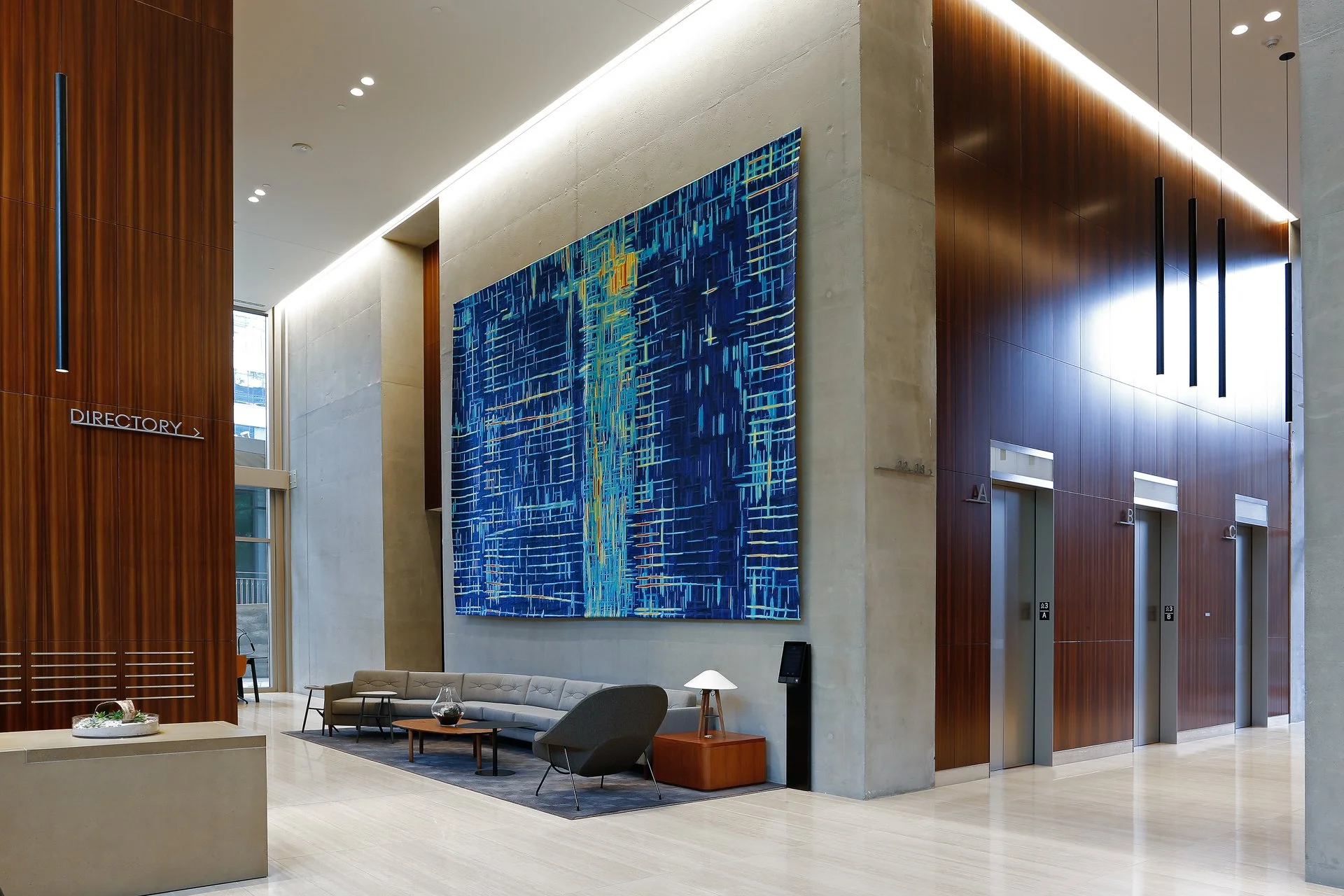
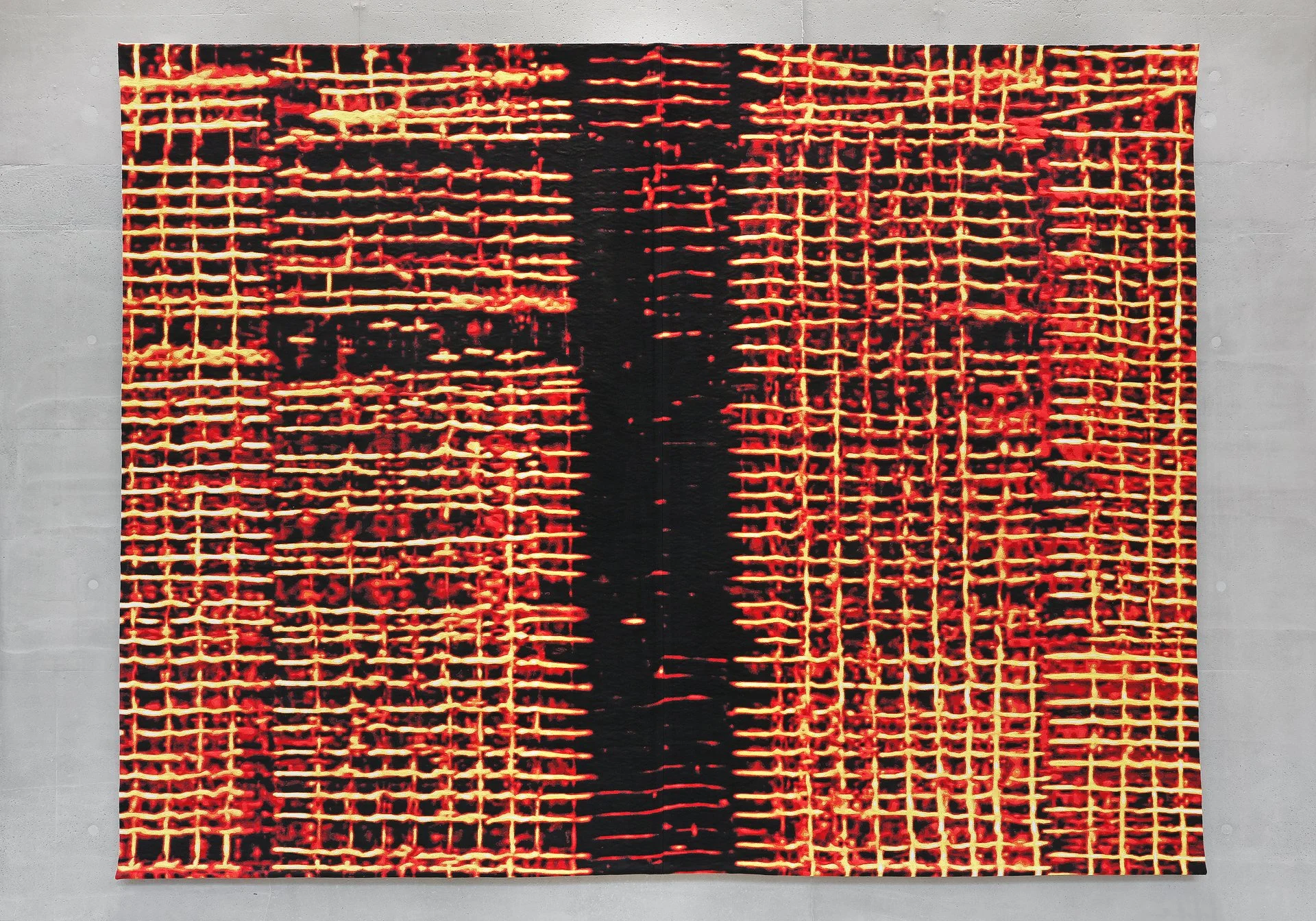
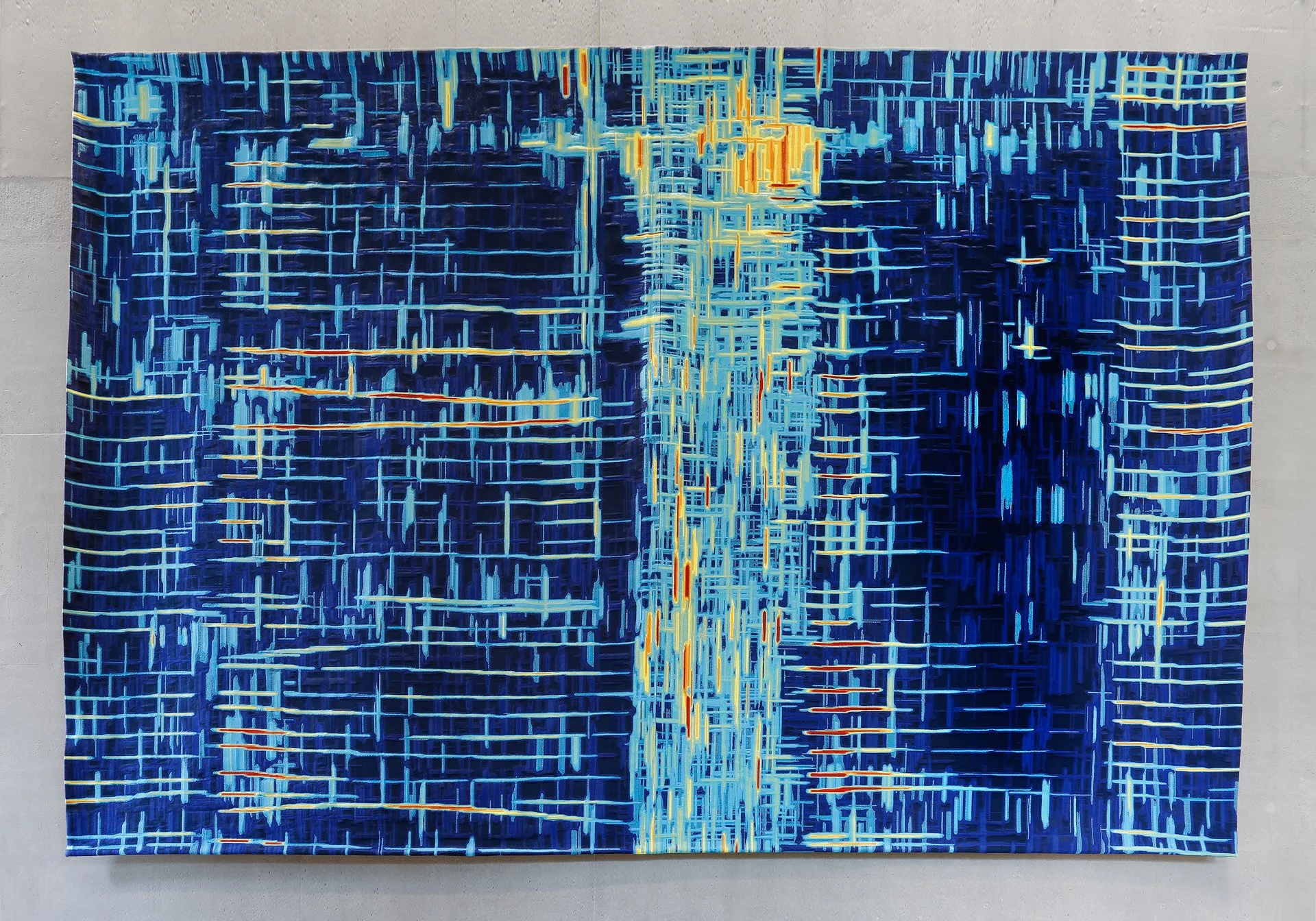
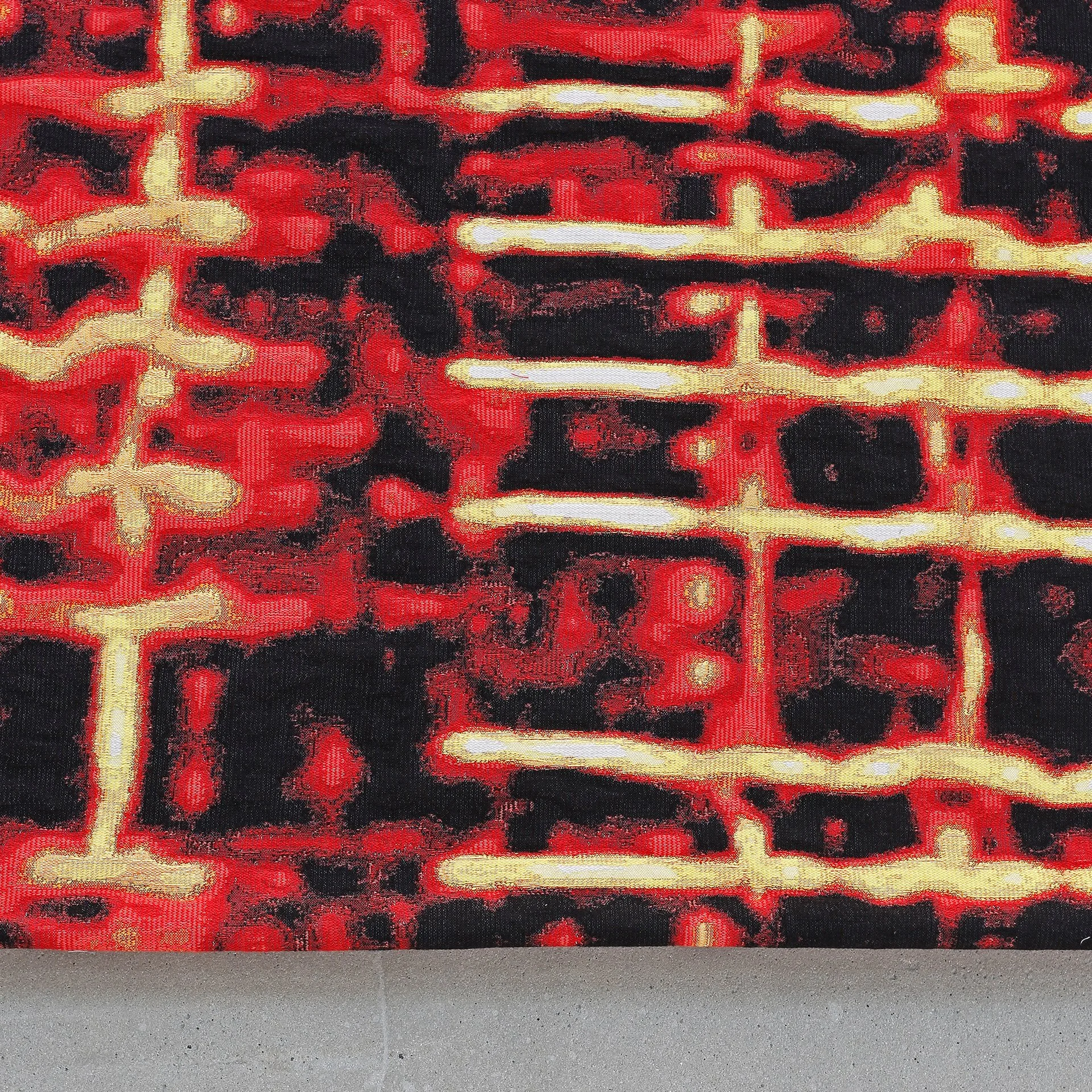
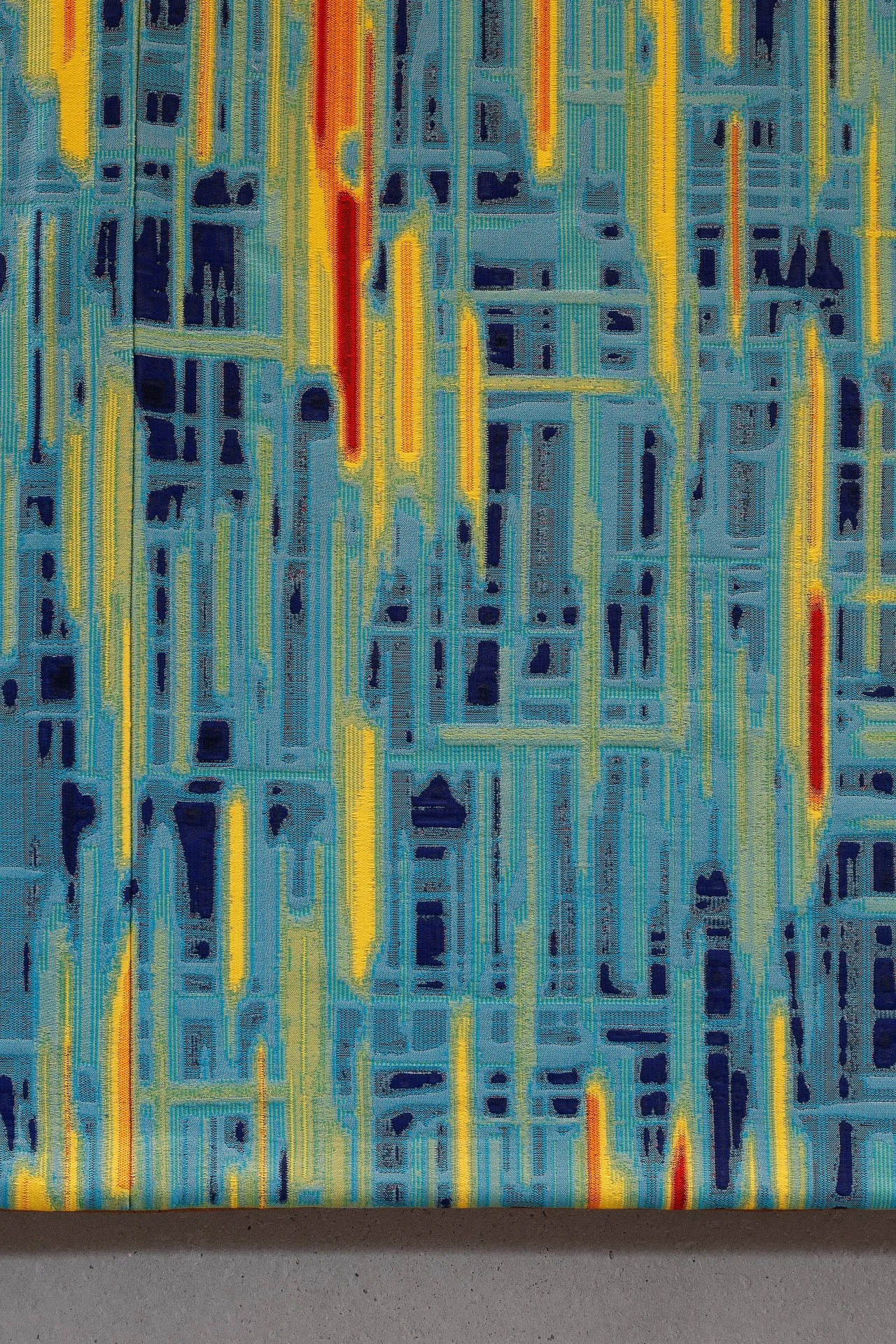
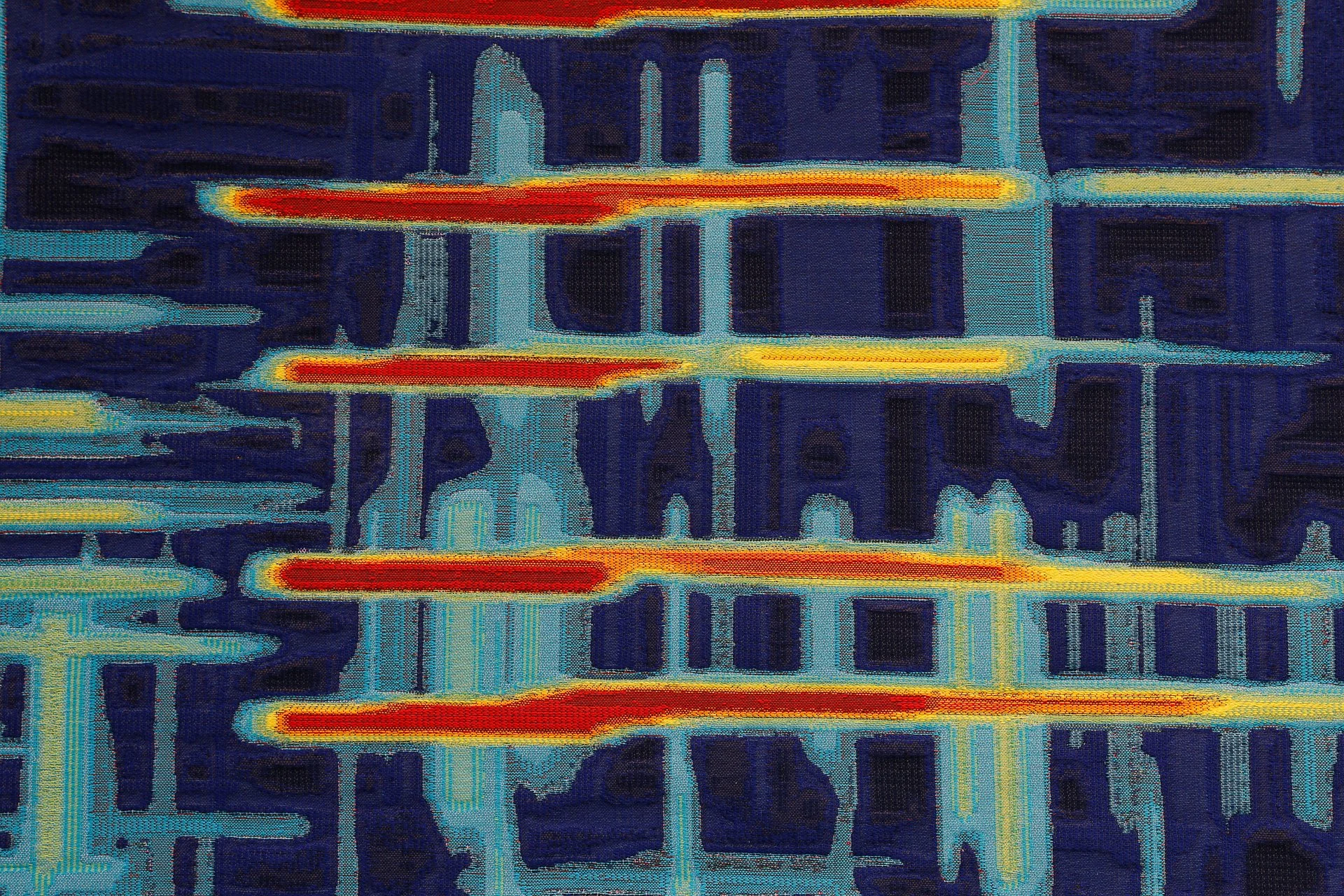
Private commission with Skanska USA for the lobby of a new office tower in Seattle, WA, 2021. Partnering with Hilti, a concrete-scanning device for detecting the rebar in the wall on which they are mounted provided the source imagery for these tapestries that were woven at a mill in Flanders Belgium.
Photography by Mark Woods.
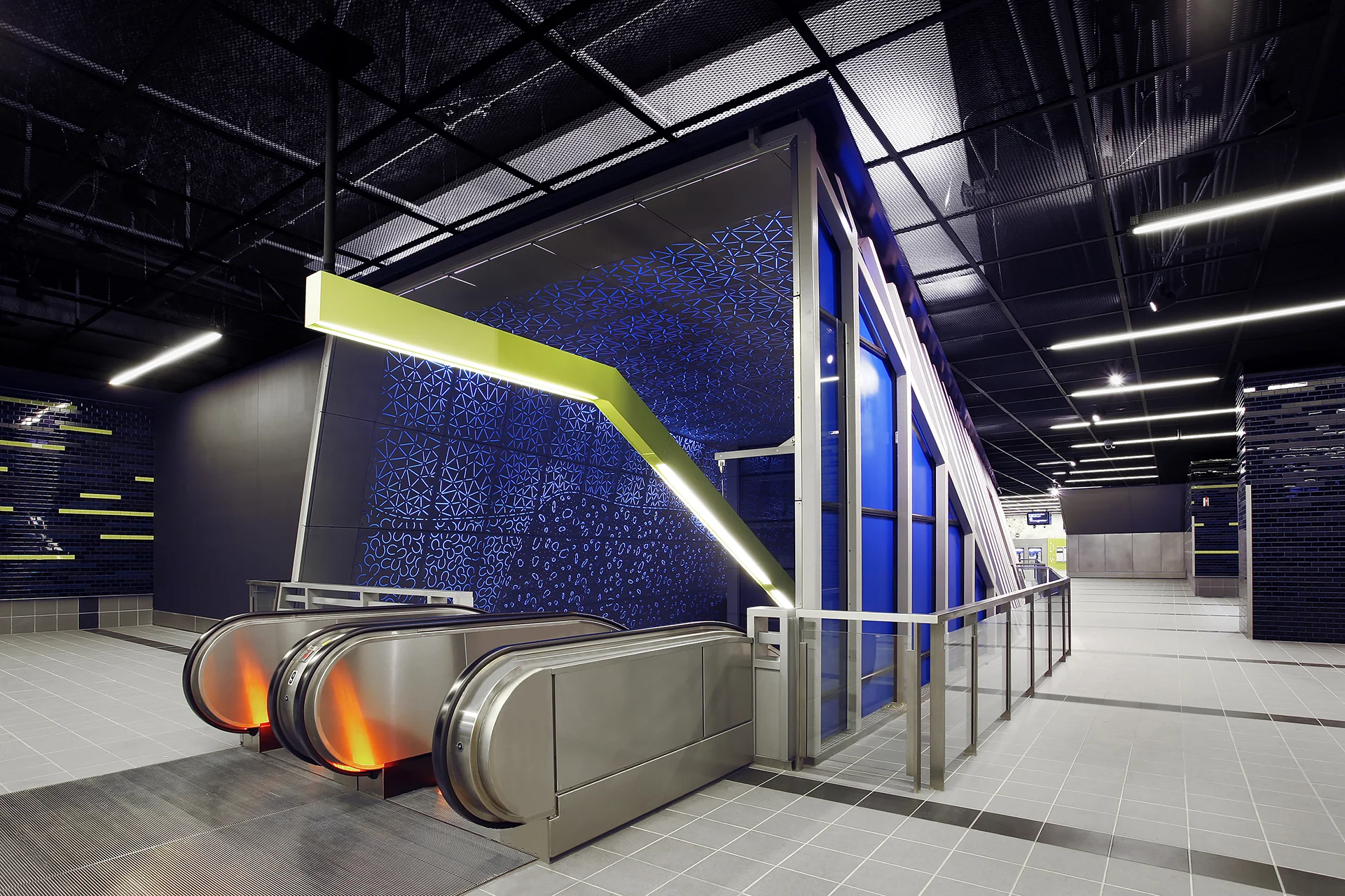
Subterranium, 2016
Aluminum, Polycarbonate
44 ft x 109 ft x 34 ft
At the heart of this station’s experience, the escalators and glass elevator pass through a 55-foot-high central chamber, one of the highest interior volumes in Seattle. In collaboration with LMN Architects, Berk created an integrated architectural experience for this artwork that expresses the geological layers of soil surrounding the station walls. Backlit, perforated metal panels clad the chamber walls, forming patterns of light that express the geological layers of earth, and suffuse the space with ambient light.
Photography by Mark Woods.
Claim Stakes, 2019
Stained redwood and polyester rope
4 ft x 284 ft x 32 ft
A grid of removable wooden posts creates this queuing system for the water taxi terminal building and highlights the significance of the hundreds of thousands of pilings driven into the waters surrounding Seattle for a variety of uses, but primarily to create new land. The redwood stanchions are stained in a gradient of colors to reference tidal marks and are connected by blue marine rope with enough sag to mimic the gentle waves of Puget Sound.
Threshold, 2009
Salvaged timbers, epoxy, urethane, and cork
18 ft x 24 ft x 44 ft
The timbers used to create Threshold were salvaged from a one-story building that previously stood on the site of this project. The floor tiles are slices from three of these beams, laid in sequence and book-matched to make the resulting pattern.
Beneath the Bridge Above, 2013
Inkjet print on reflective film and sign substrate
Dimensions Variable
These images depicts two of the 102 configurations that King County DOT can fabricate for bridges with spans up to 106' using the Bridge Design Manual that I created during two years of residency. The artwork renders a small bridge visible and animates the experience of traveling over it. When approaching the bridge, the images on individual blades align to create a photographic image. All photography was captured in and around the creek habitats that are potential candidates for new bridge structures.
Cloud Bank, 2009
Acrylic, PVC coated stainless steel cables, aluminum
13 ft x 20 ft x 16 ft
Cloud Bank is a suspended sculpture located in the main lobby of Shoreline City Hall and includes fourteen independent shapes that coalesce into one intricate form, serving as a visual metaphor for the City’s creation and the independent and collaborative nature of its original neighborhoods.